
Find out why our many satisfied dentists trust The Art of Aesthetics. You will see the difference in our cosmetic dental laboratory from esthetic diagnostic wax-ups to dental veneers and crowns. The Art of Aesthetics is the cosmetic dental lab you have sought for many years. At least, our clients think so. Please get in touch with us today!

Digital or Conventional PVS
Whether submitting digital scan files or conventional PVS impressions, dentists can rely on our cosmetic dental laboratory for high-precision restorations. We accept cases from most major intraoral scanners and traditional impressions. Our laboratory is compatible with 3Shape TRIOS, CEREC inLab, iTero, Medit, VivaScan, and True Definition systems. For our regular dental offices, we also provide complimentary shipping both ways, making case submission simple and efficient.
Our dental technicians design and produce all restorations to comply with applicable local and international quality and safety standards.
Why The Art of Aesthetics?
Dentists partner with The Art of Aesthetics because we focus on high-end cosmetic restorations and complex full-mouth rehabilitation cases. Although we are not a large production laboratory, we specialize in difficult aesthetic cases and work closely with selected dental practices across the United States. Our goal is to build long-term partnerships with dentists who treat demanding cosmetic patients and require consistent, high-level laboratory support. By working with our cosmetic dental laboratory, your practice has direct access to experienced technicians who understand aesthetic dentistry and complex restorative planning.
Key benefits include:
- Fast, reliable pick-up and delivery or shipping
- Dedicated technicians and personalized case support
- Highly trained and experienced dental technicians
- Modern technology supporting digital dentistry workflows
- Restorations produced to international quality standards
- 24/7 support via email, mobile text, and online contact form
One of our partner dentists once told us we were the best dental laboratory he had ever worked with. While we appreciate that feedback, we never take it for granted. We continuously refine our product quality and customer service to maintain consistent results. We invite you to experience the difference by sending a few trial cases. Our goal is simple: the 100th crown should be the same or better than the first.
Services of Our Cosmetic Dental Laboratory
- Cosmetic porcelain laminate veneers.
- Full-mouth rehabilitation (crowns, bridges, veneers, onlays, and implant restorations).
- Customized surgical guides with sleeves for implant placement
- Patient-specific CAD-CAM implant abutments.
- 3D model printing services from digital files.
Common porcelain veneer materials include:
- Feldspathic Porcelain
- IPS e.max® Press ingots
- IPS e.max® ZirCAD
- Empress® Esthetic
- Zirconia layered with e.max® Porcelain
Cosmetic Implant Restorations
We provide implant-supported restorations designed for both esthetics and long-term function. Our laboratory fabricates full-contour zirconia crowns, zirconia-titanium hybrid restorations, and custom implant abutments for predictable results.
Each case is designed with attention to emergence profile, soft tissue support, and crown contour to achieve natural esthetic integration, particularly in anterior regions.
Our team works with major implant systems and digital workflows to ensure precise fit, proper occlusion, and consistent outcomes across single-unit and full-arch cases.
About Our Porcelain Veneer Materials
Thin Veneers
For minimal-preparation or no-preparation cases, our cosmetic dental laboratory offers two ultra-thin veneer options: Empress® Esthetic and feldspathic porcelain. These materials are commonly used when preserving natural tooth structure is important.
Feldspathic porcelain is a traditional veneer material known for its excellent translucency and highly natural appearance. Our ceramists are experienced in fabricating delicate feldspathic veneers for cases such as minimal-prep veneers and diastema closure. Because we use fine porcelain powders and hand-layering techniques, the fabrication process requires significant skill and precision.
Historically, feldspathic veneers were produced using the platinum foil technique, which allowed ceramists to create extremely thin restorations. Today, pressable materials such as Empress® Esthetic provide a modern alternative with comparable aesthetics.
One limitation of feldspathic veneers is that chairside modifications can be more difficult. For cases where greater flexibility or adjustments may be required, Empress® Esthetic is often recommended.
Empress® Esthetic
Since 2003, our cosmetic dental laboratory has used Empress® Esthetic as an alternative to feldspathic porcelain veneers. This material allows us to fabricate thin, highly aesthetic porcelain laminate veneers while providing improved strength and clinical versatility. Developed by Ivoclar Vivadent, Empress® Esthetic has become widely used in cosmetic dentistry for natural-looking restorations.
One advantage of Empress® Esthetic is that it can be easily etched and bonded to natural tooth structure. Unlike feldspathic veneers, minor chairside adjustments are also possible when necessary.
What is IPS Empress® Esthetic?
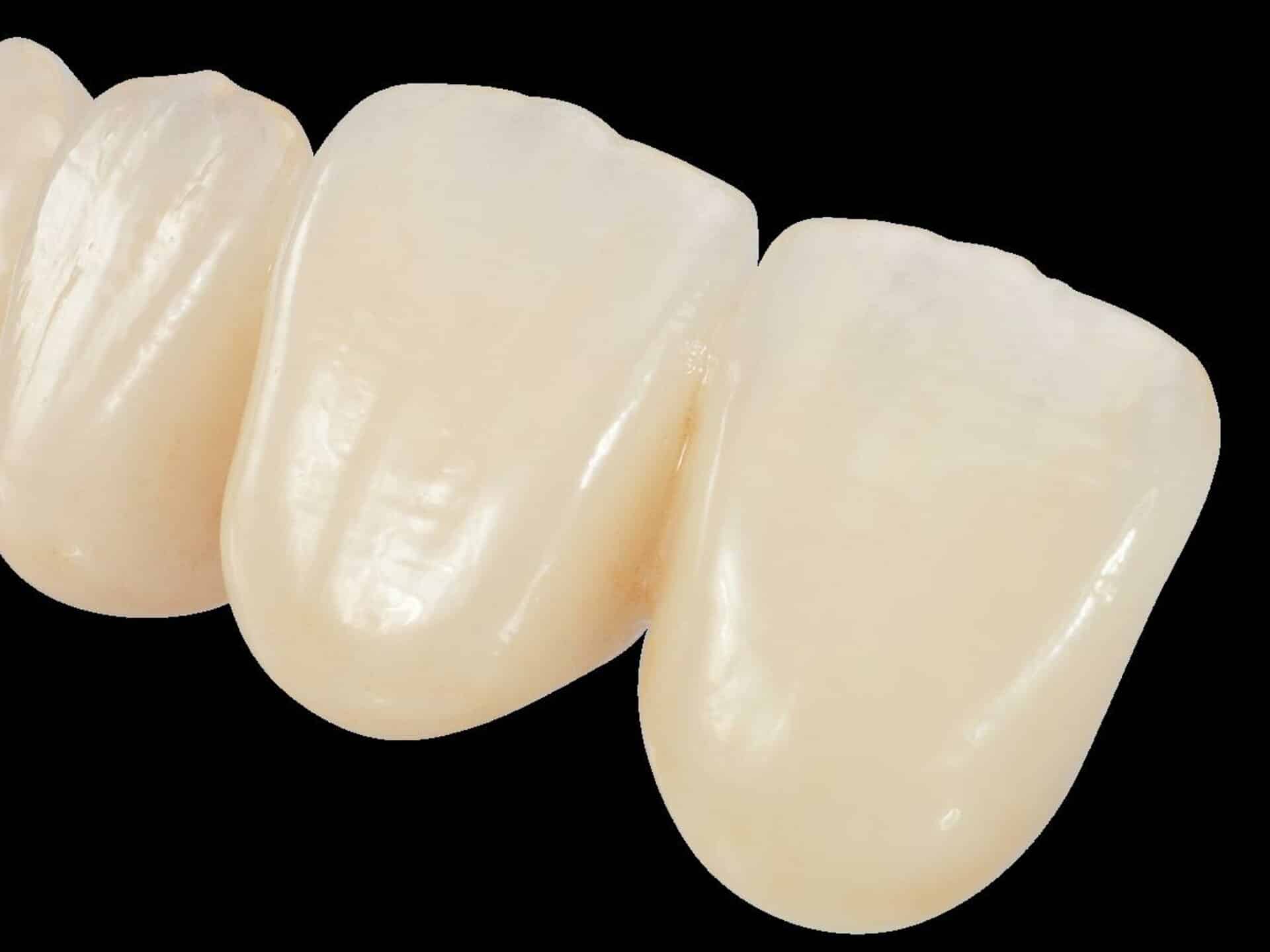
IPS Empress® Esthetic is a leucite-reinforced glass-ceramic material supplied in pressable ingots with a wide range of shades. It can be pressed and optionally layered with porcelain to enhance aesthetics. Typical indications include inlays, onlays, veneers, and anterior crowns. It is generally not recommended for posterior crowns or cases involving heavy occlusal forces. To date, we have not encountered allergic reactions associated with this material; however, if a patient has known sensitivities to similar ceramics, alternative materials may be considered.
IPS e.max Pressed or CAD Layered Veneers
IPS e.max is one of our preferred materials, and our cosmetic dental laboratory often recommends it for full-mouth rehabilitation cases. Using the same material for veneers, crowns, bridges, and onlays provides advantages such as consistent shade, uniform surface texture, and harmonious aesthetics across the entire restoration. This consistency is especially beneficial in complex cosmetic cases.
IPS e.max also offers excellent flexibility in fabrication. Our ceramists can press the restoration or build it on a CAD framework and enhance the aesthetics using a layering technique with e.max porcelain. This allows us to achieve both strength and highly natural esthetics.
What is IPS e.max?
IPS e.max, also known as lithium disilicate glass-ceramic, is a material developed by Ivoclar. It represents a major advancement in cosmetic dentistry by combining high strength with excellent translucency. Even after many years of clinical use, it remains one of the most aesthetic non-zirconia ceramic materials. With a flexural strength of approximately 470 MPa, IPS e.max provides durability while maintaining natural-looking aesthetics for veneers and crowns.
Aesthetic Diagnostic Wax Up
Every cosmetic patient is unique, and standardized instructions may not meet individual aesthetic expectations. For this reason, detailed communication is essential when submitting cosmetic cases. We recommend beginning with a comprehensive aesthetic diagnostic wax-up, which we consider one of the most important steps in cosmetic restorations.
The wax-up allows dentists and patients to visualize the proposed smile design before final restorations are fabricated. It also helps guide preparation, provisional restorations, and the overall treatment plan.
We encourage dentists to provide clear design preferences or references, such as natural, youthful, dominant, Hollywood-style, or softened smile designs. These references help guide the laboratory during the design process. However, final results may vary depending on the patient’s anatomy, occlusion, and clinical conditions.
IPS e.max® ZirCAD
technology, our cosmetic dental laboratory can produce precise restorations suitable for complex cases, including full-mouth rehabilitation.
ZirCAD blocks are available in multiple translucency levels, such as MT (medium translucency), LT (low translucency), and MO (medium opacity), as well as MT Multi polychromatic shades. These options allow us to balance strength and aesthetics depending on the clinical indication.
For enhanced aesthetics, we can layer e.max ceramic porcelain over ZirCAD frameworks. This combination provides the strength of zirconia with the natural appearance of layered ceramics, making it suitable for demanding restorative and cosmetic cases.
IPS e.max – All ceramic all you need
Zirconia Cosmetic Veneers
Zirconia has significantly transformed modern dentistry due to its exceptional strength and durability. Its high fracture resistance helps address many clinical challenges related to longevity and structural stability in restorations.
One limitation of zirconia, however, is its resistance to conventional etching techniques. As a result, zirconia does not bond to natural tooth structure as predictably as materials such as IPS e.max lithium disilicate.
Despite this limitation, zirconia veneers can be successful when the preparation design and clinical conditions are appropriate. Our cosmetic dental laboratory has the experience, technology, and technical expertise to fabricate zirconia veneers for selected cases. For enhanced aesthetics, zirconia frameworks can also be layered with IPS e.max porcelain to achieve natural-looking cosmetic results.
What Does a Cosmetic Dental Laboratory Need?
From our experience as a cosmetic dental laboratory, proper tooth preparation and clear communication between the dentist and the laboratory are essential for predictable aesthetic results.
Here are practical preparation tips from our ceramists:
- Double-check for undercuts
- Reduce adequately in critical areas
- Break or reduce interproximal contacts to subgingival
- Smooth, sharp edges and square angles
- Prepare subgingival margins, especially facial and interproximal areas
- Allow at least 1.5 mm occlusal clearance
Be Generous When Reducing
We understand that reducing healthy tooth structure can feel excessive. However, adequate reduction allows the laboratory to create restorations with proper strength, contours, and aesthetics. For example, a crown with sufficient thickness will generally perform better than an overly thin restoration.
Minimal reduction can also result in bulky veneers or compromised aesthetics. For optimal results, we generally recommend:
- Selecting the most appropriate restorative material for the case
- Sending high-quality clinical photographs with proper lighting
- Providing smile design sketches or reference diagrams
- Allowing sufficient laboratory time for fabrication
- Planning and communicating with the laboratory in advance
Remake & Adjustment
Remakes and adjustments are sometimes considered unavoidable in dental laboratory work. While technicians are human and occasional corrections may occur, our cosmetic dental laboratory strives to minimize remakes by focusing on precision and communication from the beginning. Our goal is to complete each case correctly the first time whenever possible.
Successful outcomes require cooperation between the dental practice and the laboratory. Providing accurate impressions, clear instructions, and proper records helps ensure predictable results.
For example, we recommend:
- Double-cord impressions with clearly visible margins
- No bubbles or voids in the impression
- Full-arch impressions when needed for accurate mounting
- Correct shade information, preferably with clinical photographs
- Bite registration for precise articulation
- Temporary crowns that closely replicate the final restoration
The Importance of Temporary Crowns
Temporary crowns play an important role beyond simply protecting the prepared tooth while the final restoration is fabricated. They help stabilize adjacent teeth, maintain occlusion, and preserve the correct spacing for the final crown.
A well-fitting temporary crown is essential. If the temporary restoration is too loose or too tight, it can affect the fit of the final crown. For this reason, carefully fabricated temporary crowns help ensure smoother delivery and more predictable final results.
Cosmetic Dental Laboratory and IPS e.max ZirCAD MT
At The Art of Aesthetics cosmetic dental laboratory, our ceramists enjoy working with IPS ceramic systems such as IPS e.max, ZirCAD, and Empress Esthetic. These materials provide both strength and aesthetic flexibility for complex cosmetic restorations.
Just as a painter relies on canvas or a potter depends on clay, our ceramists rely on high-quality ceramic materials to create natural-looking restorations. While modern digital technologies assist in fabrication, the final aesthetic outcome still depends on the skill, experience, and artistic ability of the ceramist.
IPS e.max ZirCAD MT, with its balanced translucency and strength, allows our technicians to create restorations that combine durability with refined aesthetics. For cosmetic dentists seeking highly aesthetic restorations, these materials help us deliver precise and natural-looking results.
IPS e.max ZirCAD
Providing Detailed Instructions to the Cosmetic Dental Laboratory
Although our ceramists are highly trained and experienced, clear instructions from the dentist are essential for achieving the desired aesthetic outcome. Detailed communication helps ensure that both the dentist and the laboratory share the same expectations for the final restoration.
For example, one American Academy of Cosmetic Dentistry (AACD) Accredited Fellow who has worked with our laboratory for over 15 years provides extremely precise case instructions. His documentation often includes exact anterior measurements, smile design preferences, and detailed aesthetic goals for each individual patient. Even with long-term partnerships, each cosmetic case is customized.
When submitting cosmetic cases, we recommend including as much information as possible, such as tooth shapes, smile design preferences, shade selection, translucency, surface texture, bite records, and overall aesthetic expectations.
Dentin Shade Information
Because the laboratory does not see the patient directly, accurate shade communication is critical. We strongly recommend providing multiple clinical photographs under natural lighting conditions, preferably including shade tabs for comparison. Using two or more shade tabs in photographs helps provide more accurate color reference.
For optimal results, dentists may also provide dentin shade information, especially for anterior restorations. The underlying dentin color can influence the final shade of thin ceramic restorations such as veneers and crowns. Multiple photographs from different angles, including full-arch views, can also assist the laboratory in achieving the most accurate shade match.
Educating Patients
Basic dental anatomy, tooth shape, and smile design principles are well understood by dentists and ceramists. However, many patients may not be familiar with these concepts when discussing cosmetic treatment. Providing patients with a basic understanding of smile design can help reduce misunderstandings between the patient, dentist, and cosmetic dental laboratory.
In some full-mouth rehabilitation cases, patients may have specific aesthetic expectations that differ from traditional anatomical designs. Clear communication with both the patient and the laboratory helps ensure that the final restorations reflect the desired outcome. At The Art of Aesthetics, our goal is to work closely with dentists to deliver restorations that align with each patient’s expectations while maintaining functional and aesthetic quality.
About The Art of Aesthetics Cosmetic Dental Laboratory
Serving Selected High-End Dental Practices
The Art of Aesthetics was founded in 2003 in Carmel, Indiana, just north of Indianapolis. From the beginning, our focus has been on cosmetic dentistry and complex restorative cases. While the dental industry has rapidly transitioned toward fully digital workflows, the craftsmanship of skilled ceramists remains essential for highly aesthetic restorations.
Today, we focus on serving selected dental practices that demand high-level cosmetic results. Our laboratory now operates with logistics centered in California, allowing us to support dentists throughout the United States and internationally. From porcelain veneers and crowns to implant restorations and full-mouth rehabilitation, we have the experience to manage both simple and complex cosmetic cases.
Shade and Material Selection
Advancements in digital photography have made shade communication easier and more accurate than traditional methods. Instead of requiring in-person shade selection, dental offices can transmit shade information using high-quality photographs taken with a smartphone or digital camera. Images captured under natural lighting with shade tabs often provide more precise communication between the dentist and the laboratory.
At The Art of Aesthetics, we utilize widely recognized dental materials, including IPS Empress®, IPS e.max lithium disilicate, IPS e.max ZirCAD, zirconia, titanium, gold, and other advanced porcelain ceramics. For certain implant components, we may also work with providers such as ZimVie (formerly Zimmer Biomet) and Atlantis. If your practice prefers specific materials, we are happy to accommodate them when appropriate for dental use.
Personalized Laboratory Partnership
Building a strong partnership between the dental practice and the laboratory is essential for predictable cosmetic outcomes. At The Art of Aesthetics, we believe trust and communication form the foundation of long-term professional relationships.
We are available to support your team through direct communication, including phone consultations, email, and text messaging. Our goal is to make collaboration simple and efficient so that each case can be planned and executed with precision.
Contact Our Cosmetic Dental Laboratory
The Art of Aesthetics provides cosmetic dental laboratory services to dental practices seeking high-quality aesthetic restorations. We welcome inquiries from dentists who require veneers, crowns, implant restorations, or complex cosmetic rehabilitation cases.
Dental Laboratory for Cosmetic Dentists
We provide cosmetic dental laboratory services for dentists who require highly aesthetic restorations and reliable laboratory support. Our team fabricates porcelain veneers, crowns, implant restorations, and diagnostic wax-ups for cosmetic and full-mouth rehabilitation cases.
Our restorations are hand-crafted by experienced ceramists using advanced ceramic materials such as IPS e.max, Empress Esthetic, and other high-quality porcelain systems. To achieve the most accurate results, we encourage dentists to provide anterior measurements, study models, digital scans, or clinical photographs that illustrate the desired aesthetic outcome.
For practices using conventional impressions, we offer complimentary shipping labels for easy case submission.
Digital Scanner Compatibility
The Art of Aesthetics cosmetic dental laboratory supports most modern digital dentistry platforms, including:
Zirconia and Ceramic Restorations
Zirconia (zirconium dioxide) is widely used in modern restorative dentistry due to its strength and durability. Our laboratory fabricates zirconia crowns, bridges, and cosmetic restorations using advanced ceramic systems, including IPS e.max and ZirCAD materials.
Whether your case requires zirconia restorations, layered e.max veneers, or other ceramic solutions, our laboratory can support both routine and complex cosmetic dentistry cases.
Checklist for Successful Cosmetic Restorations
Comprehensive Diagnosis and Visual Records
Cosmetic success begins well before the drill ever touches a tooth. The most important step in a smile makeover is the diagnostic phase. Dentists must gather full-mouth images, bite records, occlusal scans, and intraoral photographs. These visuals allow both the dentist and the cosmetic dental laboratory to understand the patient’s facial proportions, smile line, lip mobility, and dental condition.
Dentists should capture high-resolution retracted views, 12 o’clock incisal shots, and lip dynamics. Videos of the patient speaking can illustrate phonetics and incisal display. These tools act as the eyes of the laboratory. Dentists should also use calibrated shade guides in multiple lighting environments to ensure the cosmetic lab can accurately replicate the patient’s natural coloration.
Diagnostic Wax-Up and Smile Design
Following diagnostics, the next step is creating a diagnostic wax-up. This preview shows both the dentist and the patient how the proposed restorations will look in shape, proportion, and position. When appropriate, digital smile design (DSD) files or 3D simulations can be sent to The Art of Aesthetics cosmetic dental laboratory to supplement models. This additional information helps the laboratory interpret the aesthetic and functional goals with greater accuracy.
Provisionals as Functional Prototypes
Well-designed provisionals are critical when working with cosmetic dental laboratories. These temporaries serve as prototypes for the final restorations and allow the patient to test function, phonetics, and aesthetics over time.
Provisionals should be fabricated from the approved wax-up. After several days of wear, the patient’s feedback should be documented carefully. Adjustments to contour, length, or color should be reflected in updated photographs and impressions and then forwarded to the cosmetic dental laboratory. Photographs should include lip repose, full smile views, and side profiles showing incisal edge position and tooth width.
Communication With the Cosmetic Dental Laboratory
Working with a cosmetic dental laboratory requires precise communication. Dentists should prepare detailed lab prescriptions that include ceramic material, shade, translucency level, incisal effects, and margin locations.
Preparation designs should be clearly photographed and labeled, including notes on soft tissue contours or irregularities. Sending a “prep shade” photograph is particularly important when using translucent ceramics such as feldspathic porcelain or lithium disilicate.
Precise Shade Selection and Photography
Shade selection is one of the most challenging aspects of cosmetic dentistry. Dentists should photograph the shade tab next to the natural tooth under natural daylight conditions and from multiple angles.
Additional notes should include translucency, mamelons, incisal halo, surface texture, and luster. These details influence the layering and characterization of the final ceramic restoration. Modern tools such as calibrated photography apps or handheld spectrophotometers can further improve shade accuracy.
Preparation Design and Impression Technique
An excellent preparation technique is essential. Margins must be smooth and clearly defined with distinct finish lines. Dentists should avoid undercuts, ensure adequate reduction, and photograph preparations with mirrors to confirm clarity.
Margins should often be placed slightly subgingival when appropriate to avoid black triangles and allow proper porcelain contours. Careful preparation and impression techniques reduce delays and minimize the need for remakes or adjustments.
Final Try-In and Evaluation
When restorations arrive from the cosmetic dental laboratory, the try-in should be performed under controlled lighting conditions. Shade and value should be evaluated against a neutral background.
Patients should speak and smile during the evaluation to confirm incisal length, midline alignment, and overall esthetics. Try-in pastes matching the final cement shade should be used to simulate the final appearance.
Dentists should allow adequate time between try-in and cementation in case adjustments or laboratory refinements are necessary.
Cementation Protocol
Once the patient approves the restorations, cementation should follow proper bonding protocols. Moisture control is critical, and isolation should be maintained using a rubber dam or cheek retractors.
Resin cement selection should match the optical characteristics of the ceramic. Excess cement must be carefully removed to protect surrounding tissues and prevent staining.
Clinical Checklist for Cosmetic Restorations
Use this checklist to ensure all steps are completed:
- Initial patient consultation and aesthetic goals
- Comprehensive records (photos, scans, models, occlusion)
- Diagnostic wax-up approved by dentist and patient
- Provisionals fabricated from the wax-up
- Detailed laboratory communication and shade mapping
- Accurate shade documentation with photography
- Proper preparation and impression techniques
- Try-in evaluation with patient feedback
- Final cementation with careful occlusion verification
Allow adequate time for the ceramist to design and fabricate the restorations. Experienced cosmetic ceramists often reevaluate and refine restorations before shipment to ensure the best aesthetic outcome. Rushing the process increases the risk of remakes or adjustments.
Limitations of No-Prep Veneers
No-prep veneers are often marketed as quick cosmetic solutions requiring little or no tooth preparation. While they may sound appealing, they have several limitations.
Without tooth preparation, veneers may appear bulky or unnatural because the underlying tooth structure is unchanged. They also provide limited ability to correct discoloration, misalignment, or large gaps.
In addition, bonding strength may be reduced because enamel surfaces are not prepared. Over time, this can increase the risk of detachment or failure.
For many patients, traditional porcelain veneers offer better aesthetic control, stronger bonding, and longer-lasting results.
Conclusion
No-prep veneers may appear attractive due to their minimally invasive approach, but they are not appropriate for many patients. Their limited customization, durability, and long-term performance make them less predictable than traditional veneer techniques.
Successful cosmetic outcomes depend on comprehensive diagnosis, careful preparation, detailed laboratory communication, and collaboration with an experienced cosmetic dental laboratory.
FAQs About Cosmetic Dental Laboratory
Cosmetic dentists often ask the following questions when selecting a cosmetic dental laboratory for veneers, full-mouth rehabilitation, and complex aesthetic restorations.
Why should a cosmetic dentist consider working with The Art of Aesthetics cosmetic dental laboratory?
Even the most experienced cosmetic dentists rely on a trusted cosmetic dental laboratory to translate clinical planning into precise restorations. The Art of Aesthetics focuses on complex aesthetic cases, including porcelain veneers, full-mouth rehabilitation, and implant restorations. Our ceramists work closely with dentists to interpret smile design goals, shade mapping, and functional requirements. Using advanced ceramic systems such as IPS e.max, Empress Esthetic, and ZirCAD, combined with skilled hand-layering techniques, we aim to deliver restorations that maintain consistent shade, texture, and natural appearance across the entire case. Many cosmetic dentists choose to test a laboratory partner by submitting a few trial cases to evaluate communication, craftsmanship, and consistency before establishing a long-term collaboration.
What is the typical turnaround time for cosmetic veneers?
The turnaround time depends on the number of units and the complexity of the case. Simple veneer cases may be completed faster, while larger multi-unit cosmetic restorations require additional time for design, fabrication, and quality evaluation. Cosmetic veneer cases should never be rushed, as patients are often making a significant long-term investment in their smile.
For most multi-unit cosmetic veneer cases, we typically recommend allowing three weeks or more for proper fabrication. Cases involving implants or more complex restorative combinations may require additional time. Allowing adequate time gives the ceramist the opportunity to carefully design, fabricate, and refine the restorations to achieve the best aesthetic result.
What does a cosmetic dental laboratory do?
A cosmetic dental laboratory fabricates highly aesthetic dental restorations such as porcelain veneers, crowns, implant restorations, and full-mouth rehabilitation cases. These restorations are designed to match natural tooth anatomy, shade, and translucency for cosmetic dentistry.
What materials are used in cosmetic dental restorations?
Common materials include IPS e.max lithium disilicate, Empress Esthetic porcelain, zirconia (such as ZirCAD), and layered ceramic systems. These materials provide both strength and natural-looking aesthetics.
How do dentists communicate shade information to a cosmetic dental laboratory?
Dentists typically provide high-resolution photographs taken under natural lighting with shade tabs placed next to the tooth. Multiple angles and dentin shade information help ceramists reproduce natural tooth color accurately.
Why are diagnostic wax-ups important in cosmetic dentistry?
Diagnostic wax-ups allow dentists and patients to visualize the final restoration before treatment begins. They guide tooth preparation, provisional restorations, and communication with the cosmetic dental laboratory.
What makes a cosmetic dental laboratory different from a regular dental lab?
Cosmetic dental laboratories specialize in aesthetic restorations that require advanced ceramic materials, precise shade matching, and highly skilled ceramists. They often work closely with cosmetic dentists on complex smile design and full-mouth rehabilitation cases.